Best Prepaid Europe Data Plans for Travelers (2026)
What to look for in a prepaid Europe data plan: coverage, data size and trip length Top prepaid options broken down by traveler type, from weekend city breaks to multi-country trips How to install and activate a prepaid eSIM plan before you fly
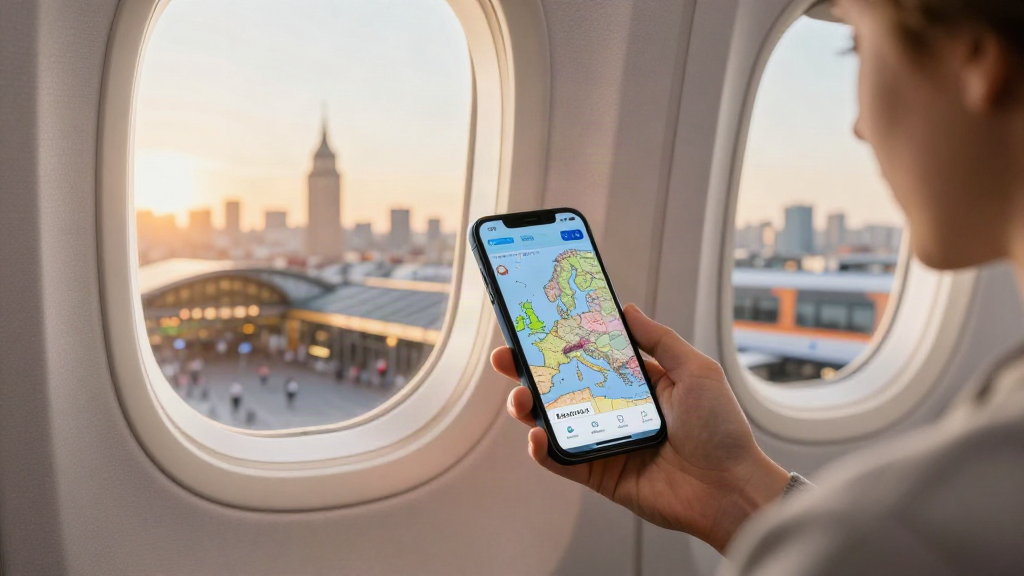
Best Prepaid Europe Data Plans for Travelers: How to Choose Yours
You land in Europe, you switch your phone on, and you want data right away. No queue at a kiosk, no plastic SIM to fit into a tiny tray, no roaming bill waiting for you at home. Prepaid Europe data plans are built for exactly that moment. The trick is picking the right one for your trip.
This guide walks you through what actually matters in a prepaid plan, shows how the options stack up for different kinds of travelers, and shows you how to get set up before you fly.
What to Look For in a Prepaid Europe Data Plan
Most prepaid plans look similar at first glance. The differences show up in three places, and these are the ones worth checking before you buy.
Coverage. Does the plan work in every country on your route? Some plans cover one country only. Others, like a regional Europe plan, cover dozens. If your trip crosses borders by train, ferry, or short flight, a multi-country plan saves you from buying again mid-trip.
Data size. Plans are sold in bundles, usually in gigabytes. The right size depends on how you use your phone. A weekend of maps, messages, and the odd photo is very different from two weeks of streaming and video calls.
Trip length. Prepaid plans run for a set number of days, typically 7, 15, or 30. Match the validity window to your trip so the plan does not expire while you are still away.
A fourth point is easy to overlook: setup. The best plan is the one you can install in a few minutes and activate the moment you land, without hunting for a shop.
Top Prepaid Options by Traveler Type
There is no single best plan for everyone. Here is how to think about the options by the way you travel.
For a weekend city break
You need a small bundle with a short validity window and coverage in one country. A light plan of a few gigabytes for 7 days is usually plenty for maps, messaging, and booking apps. Do not overpay for data you will not touch.
For a multi-country trip
This is where a regional Europe plan earns its place. Instead of buying a new plan at every border, you carry one plan across many countries. Look for wide destination coverage and a validity window that matches the full length of your trip.
For digital nomads and longer stays
You want more data and a longer window, usually 30 days. A larger bundle gives you room for video calls, cloud backups, and working from a cafe. If you move between countries, make sure the plan travels with you.
For business travelers
Reliability and speed matter more than price. You want a plan that activates fast, keeps your own number for calls and messages, and works as soon as you leave the airport.
For students abroad
A long validity window and a generous bundle keep you connected through a whole term without topping up every week. A regional plan also helps on weekend trips to neighbouring countries.
How Much Data Do You Actually Need?
A rough guide helps you size your plan with confidence:
Light use (maps, messages, email, occasional photos): around 1 to 2 GB per week.
Medium use (social media, music, some video): around 3 to 5 GB per week.
Heavy use (streaming, video calls, hotspot to a laptop): 10 GB or more per week.
Most travelers overestimate. If you are unsure, start with a smaller bundle and add more from your phone rather than buying a big plan you never finish.
How to Install and Activate a Prepaid eSIM Before You Fly
A prepaid eSIM makes this simple. There is no shop and no plastic SIM to swap. Here is the whole process:
Choose your destination and plan in the app, from a weekend in one country to a regional Europe plan.
Install the eSIM while you still have home Wi-Fi, usually by scanning a QR code. It takes about five minutes on your phone.
Activate on landing. The plan starts when you arrive, so you are online the moment you switch your phone on.
You keep your own number and your WhatsApp. Your regular line stays available for calls and messages, while the eSIM handles your data.
Prepaid eSIM vs. Roaming and Physical SIMs
Roaming from your home carrier is the easiest option on paper, but it is usually the most expensive, and speeds can be throttled. A physical local SIM is often cheap, but it means finding a shop, showing your passport, and losing access to your own number.
A prepaid eSIM sits in the middle: affordable, wide coverage, and instant. You set it up before you travel and skip the airport queue entirely.
Frequently Asked Questions
Can I use a prepaid Europe data plan in more than one country? Yes. A regional Europe plan covers many destinations, so you can cross borders without buying a new plan.
Will I keep my own number and WhatsApp? Yes. The eSIM carries your data, so your number and messaging apps keep working as usual.
How soon can I get online? Install before you fly and the plan activates when you land. Setup takes about five minutes.
What if I run out of data? You can add a top-up from your phone in a couple of taps, without leaving your trip.
The Bottom Line
The best prepaid Europe data plan is the one that matches your trip: the right coverage, the right data size, and a validity window that lasts as long as you do. Pick a plan you can install in minutes and activate on landing, and you will never think about it again.
Ready to travel connected? Choose your destination, install your eSIM before you fly, and land with data already on.
Published by eSIM2you. Browse travel eSIMs for 200+ destinations.